
 ไทย
ไทย English
 中國人
中國人
The International Football Association Board (IFAB) has announced a series of rule amendments set to take effect at the 2026 World Cup.
Refereeing controversies have dominated football headlines worldwide over the past year, prompting IFAB to hold a special meeting to clarify the laws ahead of this summer's tournament spanning the United States, Canada and Mexico.
'Anti-Arsenal' VAR Powers

One of the most notable changes is something the majority of Premier League supporters will welcome, with many on social media even suggesting the rule was adjusted specifically to target Arsenal's approach.
Under the updated regulations, VAR can now step in if a foul is detected before a corner or free kick is delivered—such as an attacker obstructing a defender—a tactic Mikel Arteta would acknowledge contributed meaningfully to Arsenal's campaign this season.
However, it was not Arsenal who were cited as the example of the new violation. FIFA's head of refereeing Pierluigi Collina instead pointed to England as an offending side.
Collina referenced England's goal in a March friendly against Uruguay, in which Ben White—an Arsenal player, somewhat ironically—headed home after Crystal Palace midfielder Adam Wharton was observed screening off a defender.
"We try to solve this and let's see what can be next," Collina said. "It would only be for fouls committed by an attacker. I don't think any of you would be happy with a goal scored as a result of a foul being committed and the reason why the VAR can't intervene is that the protocol says that.
"There is a clear foul committed against the [Uruguay] defender. The attacker clearly goes and illegally blocks the opponent; his only objective is to prevent the defender from being able to defend against his opponent.
"We are convinced that this goal cannot stand, it is completely unfair. We want the VAR to intervene even if a foul is committed just before the ball is in play. We are convinced nobody can object to that."
No Covering Mouths

Another major talking point of the 2025–26 season emerged in the Champions League, when Benfica midfielder Gianluca Prestianni was alleged to have racially abused Real Madrid winger Vinicius Junior back in February.
The situation was complicated by the fact that Prestianni concealed his mouth beneath his shirt while speaking to Vinicius, leaving no video evidence of the alleged offense, which Prestianni strongly denied.
Going forward, any player who covers their mouth—whether with a hand or shirt—during a confrontation will receive an automatic red card.
Importantly, the rule applies exclusively to confrontational situations. Players who cover their mouths while speaking privately with teammates or friends on the pitch will not face any sanction.
World Cup Previews

All 48 Teams
Bespoke Illustrations
Timewasting Punishments
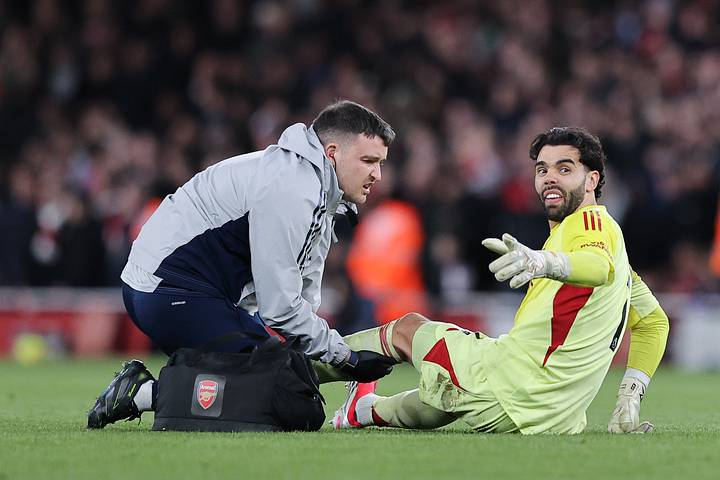
IFAB has also outlawed what have become known as tactical timeouts, where a goalkeeper receives injury treatment while outfield players retreat to the bench for a coaching consultation.
Goalkeepers may still receive treatment and delay the match in doing so, but referees will now have the authority to prevent players from drifting to the touchline for tactical discussions during stoppages.
"We will not allow the teams going to the benches when a goalkeeper is lying on the ground injured," Collina stated. "The goalkeeper has the right to be injured, but the players do not have the right to leave the field of play to have some sort of time out with their respective coaches.
"I'm afraid we didn't get a shared solution [on punishments], a solution agreed by everybody. For this season, IFAB didn't take any decision. Certainly something will be done in the future. For the time being, we rely on players' understanding of the problem.
"We told them, 'Be aware that we know,' so what we can avoid is having all the players off the field of play. There are captains, there are coaches, so certainly referees will be ready to face something like this if it should happen."
Additionally, referees will display visible five-second countdowns during throw-ins and goal kicks. Should play not resume within the given timeframe, possession will be handed to the opposing team via a throw-in or corner, depending on where the delay occurred.
No Substitution Delays

On the topic of timewasting, players will now be given just 10 seconds to exit the pitch once informed of their substitution, and must depart via the nearest touchline.
While no individual penalty will be issued to a player who lingers too long, the consequences will follow. The incoming substitute will be barred from entering the field until the first natural stoppage after one minute of play, potentially leaving the offending team a man short for a considerable stretch.