
 ไทย
ไทย English
 中國人
中國人
Appearing destined to collide since the knockout rounds began at the 2026 World Cup, England vs. Argentina stands as arguably international football's greatest rivalry.
Security measures have been ramped up in Atlanta ahead of the fixture, while tickets are being resold at staggering prices as anticipation builds for what could become both a defining moment of this tournament and a landmark chapter in World Cup lore.
Despite their lengthy and often bitterly contested history, England and Argentina have actually crossed paths relatively rarely over the years, which only amplifies the sense of occasion whenever they do meet on the pitch.
The stakes could not be greater at Mercedes-Benz Stadium on Wednesday, with not only bragging rights but a berth in the World Cup final on the line for the winner.
Ahead of what promises to be a semifinal for the ages, here's a look at how the two sides have previously matched up.
The Last Time England and Argentina Faced Off
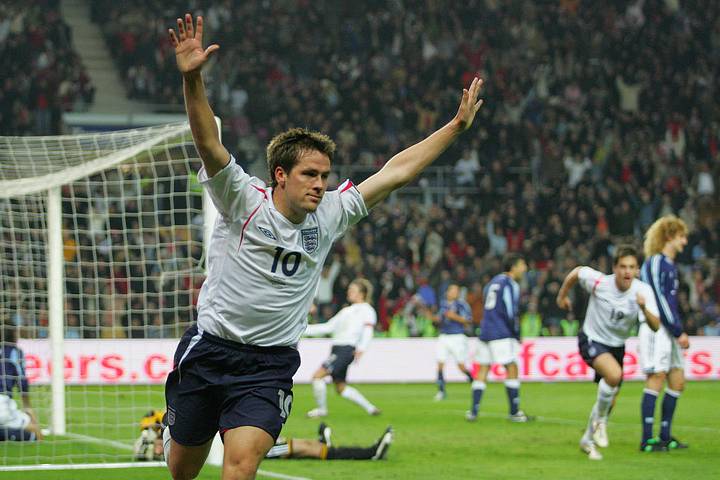
What was expected to be a straightforward friendly held in Geneva during an international break turned into something far more dramatic back in November 2005 — the last occasion England and Argentina went head-to-head.
Sven-Göran Eriksson's side found themselves trailing 2–1 with just five minutes of regulation remaining, before Michael Owen produced two late headers to dramatically turn the contest in England's favor.
Although the game was fiercely contested, it was largely free of the unsavory incidents that had marred previous meetings between the two nations.
English newspaper The Times observed in its match report that there were "no punches on the terraces, songs about the Falkland Islands, jibes regarding players' sexuality and general churlishness that, believe it or not, represents a significant thaw in diplomatic relations."
England vs. Argentina at the World Cup
Bad Blood As England Edge Early Encounters
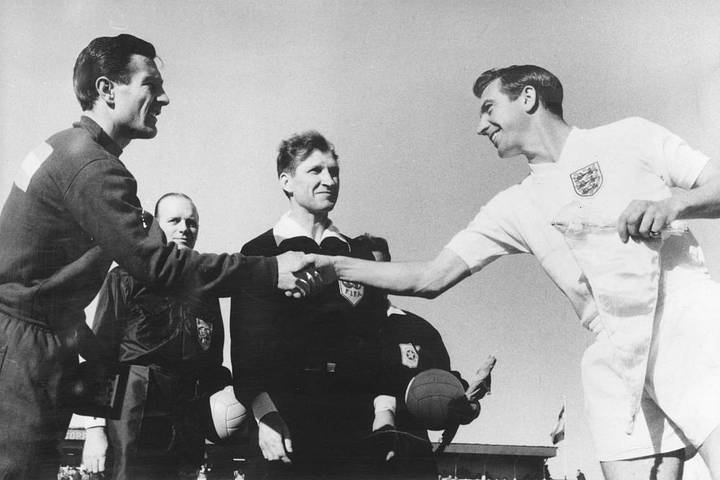
Wednesday's clash will mark the fifth time the two nations have met at a World Cup.
Their first encounter came in Chile during the group stage of the 1962 tournament, with England claiming a 3–1 victory courtesy of goals from Ron Flowers, Bobby Charlton, and Jimmy Greaves.
The sides met again four years later on English soil, with Geoff Hurst's goal proving decisive in a bad-tempered quarterfinal that further strained relations between the two countries.
Antonio Rattín refused to leave the field after receiving a red card — reportedly having failed to comprehend the German referee's instructions. The incident is widely credited with contributing to the introduction of yellow and red cards at the following tournament.
England manager Sir Alf Ramsey instructed his players not to swap shirts with their opponents following the victory, and stated at a post-match press conference: "our best football will come against the right type of opposition — a team who will come to play football, and not act as animals."
It was an inflammatory comment that would damage England's standing not only with Argentina but across much of South America.
Maradona's Moment
One of the most iconic goals in #WorldCup history.#OnThisDay in 1986, a moment of pure genius from 🇦🇷 Diego Maradona✨ pic.twitter.com/iVR9upkgYW
By far the most celebrated encounter between the two sides — and perhaps the most storied match in international football history — unfolded in the quarterfinals of the 1986 World Cup, just four years after the Falklands War.
Diego Maradona broke the deadlock by beating England goalkeeper Peter Shilton to a lofted ball into the box, punching it into the net with his hand. Tunisian referee Ali Bin Nasser, unaware of the infringement, allowed the goal to stand. It would forever be known as the "Hand of God."
Maradona then added a second, this time surging through half the pitch and rounding the keeper in a move widely considered the greatest goal in World Cup history. The shirt he wore during the 2–1 win was later sold at auction for more than £7 million ($9.3 million).
Maradona would later describe the 1986 victory as "revenge" for the Falklands, though he acknowledged that the English players had refrained from resorting to physical intimidation throughout the match.
Beckham Goes From Zero to Hero
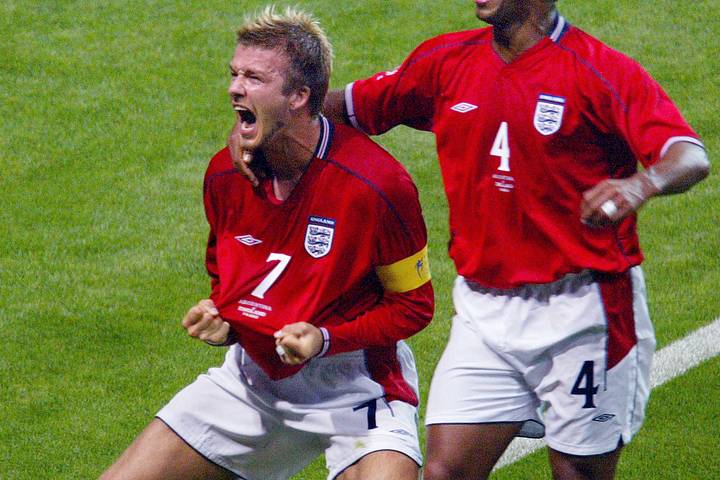
Twelve years on, Argentina knocked England out on penalties in the round of 16 at the 1998 tournament, in a match that featured a stunning goal from the then-18-year-old Owen and David Beckham being dismissed for flicking his boot at Diego Simeone.
In the aftermath, one English tabloid ran the headline "Ten heroic lions, one stupid boy," a direct reference to Beckham's red card.
The fourth and most recent World Cup meeting between England and Argentina came in the group stage of the 2002 tournament, with Beckham finding redemption by converting the match's only goal from the penalty spot.
The Messi Factor

While Maradona had his iconic moment against England, Lionel Messi never has — at least not until now.
Remarkably, the 39-year-old has yet to feature in a match against the Three Lions.
Messi had already made his international debut by the time the two teams met in late 2005, but he was left out of the squad for the trip to Geneva due to a suspension.
The young attacker had, infamously, been sent off within two minutes of his Argentina debut against Hungary three months prior, leaving him ineligible to face England.
He has had to wait 21 years for another chance.
England vs. Argentina: Complete Head-to-Head Record
Enable functional cookies to see this feature.
Top Goalscorers in England vs. Argentina
Player | Nation | Goals |
|---|---|---|
Michael Owen | England | 3 |
Mario Kempes | Argentina | 2 |
David Johnson | England | 2 |
Diego Maradona | Argentina | 2 |
Gary Lineker | England | 2 |