
 ไทย
ไทย English
 中國人
中國人
Despite widespread criticism of FIFA and Gianni Infantino over plans to essentially hand the World Cup over to private investors, soccer's global governing body continues to push forward with ambitions to expand future editions of the men's tournament to 64 teams.
The expansion to 48 teams in 2026 was already divisive, with FIFA and Infantino accused of watering down the quality and prestige of the 96-year-old competition in the name of greater revenue. Former Ghana coach Carlos Queiroz described it as "something vulgar and ordinary," stripped of "rarity" and "value" because qualifying no longer carries the weight it once did.
Infantino would contend it is part of a broader effort to truly bring the World Cup to a global audience.
Should FIFA manage to implement the 64-team model as early as 2030, it would represent exactly double the number of World Cup participants compared to 2022—the final edition of the 32-team format.
Amid the fallout from the 'World Cup for sale' controversy—which prompted UEFA to threaten a boycott of future tournaments and drew condemnation from Concacaf and the AFC—multiple reports emerged Friday of a 'research brief' circulated by FIFA "considering the strategic implications of a possible expansion of the FIFA World Cup beyond the current format."
When questioned by a Swiss broadcaster during the closing week of this summer's World Cup about the prospect of expanding to 64 teams, Infantino confirmed FIFA would be "examining" the concept once the tournament concluded. That moment has arrived, and developments appear to be accelerating.
According to ESPN, FIFA has set a deadline of Aug. 14 to appoint a firm to conduct the assessment, with findings expected by Sept. 11—a timeline that suggests a swift decision is being sought.
Since qualifying for the 2030 tournament won't get underway until the latter half of 2027, an expansion could theoretically be in place by the next World Cup. However, UEFA's open-ended boycott currently means no European nations would participate.
Less Upheaval Than Increase to 48 Teams
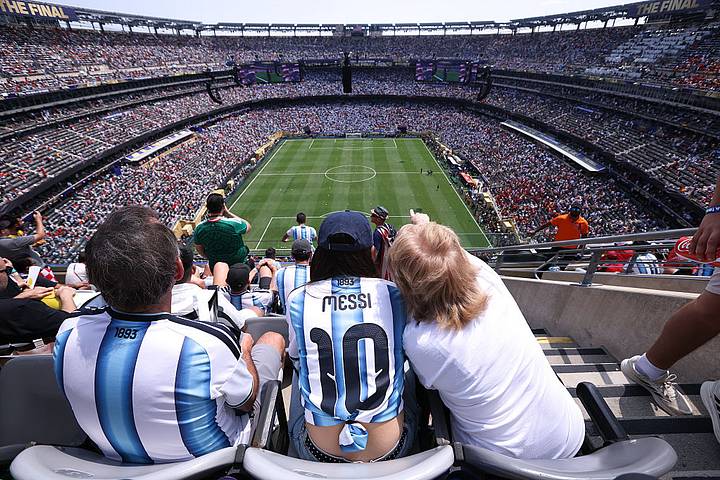
The jump from 32 to 48 teams in 2026 caused far greater disruption to the World Cup format than a move from 48 to 64 ever would. If anything, the latter would actually streamline things.
With 64 teams, the competition could feature 16 groups of four, with the top two from each advancing to a knockout stage beginning at the round of 32. No additional round would be required, meaning no increase in the number of matches any given team must play. It would also do away with the convoluted third-place group ranking system currently used to determine some knockout-stage qualifiers.
Overall, though, the total match count would rise—from 104 in 2026 to 128—giving FIFA more opportunities to sell tickets and merchandise and, in turn, generate greater revenue. For context, 2026 is already the most lucrative World Cup in history, driven in large part by a significantly higher number of matches compared to the 64 played in 2022.
Depth of Quality Won't Support 64-Team World Cup
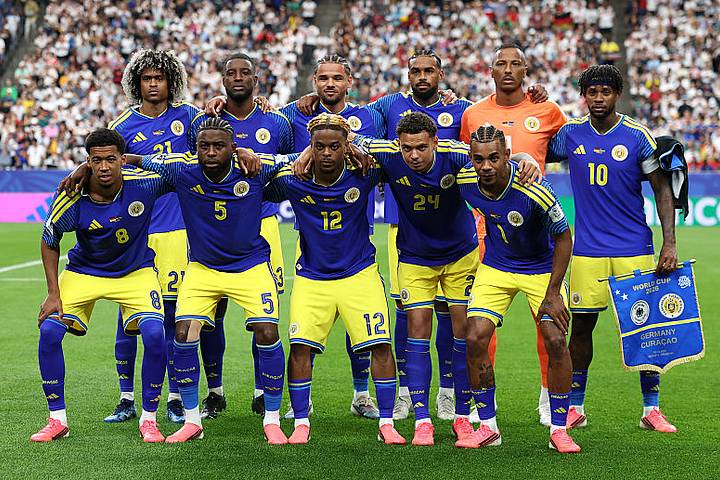
Was the 2026 World Cup genuinely improved by featuring 48 teams? More nations got to participate, but the honest answer is probably not. Ultimately, the tournament was highly predictable, with the four highest-ranked sides entering the competition making up the final four.
Of the four first-time qualifiers—Cabo Verde, Curaçao, Uzbekistan, Jordan—not one managed to win a single match. Of the eight additional teams who advanced via third-place finishes in the group stage, only Paraguay progressed beyond the opening knockout round.
International soccer simply does not possess the depth of talent to sustain a World Cup larger than 32 teams, let alone one with 64. Adding more participants will not, in the vast majority of cases, produce magical or historic moments. The tournament will only grow more predictable and forgettable.
Cabo Verde did emerge as one of the feel-good stories of the summer, advancing from the group stage to face Argentina in the round of 32. But that would have happened in a 32-team tournament too, given they finished second in Group H largely due to the underwhelming performances of Uruguay and Saudi Arabia, rather than through any singular achievement of their own.
There was already very little tension in the group stage this summer—so consider what a 64-team World Cup would do, keeping even more elite sides shielded from one another for even longer.